

How to get your first 100 users.
The first hundred users do not come from ads or from luck. They come from finding the people who already ask for what you make, answering them well, and showing up every day. Here is the playbook, step by step.
Updated 16 October 2026

Start with one kind of person.
The first hundred users rarely come from "everyone who might like it". They come from one group you can describe in a sentence: "solo accountants who still chase clients for receipts", "barbers who take bookings on Instagram", "Shopify stores answering the same shipping question all day".
Write that sentence down, then write the words those people use when they describe the problem. Those words are what you will search for, and what your first replies and posts will sound like.
Before you look for anyone
- One sentence: who it is for
- Their words for the problem, not yours
- A page that answers "what is it, what does it cost"
- A way to try it in minutes
Seven things that bring the first hundred.
- Go where they already ask
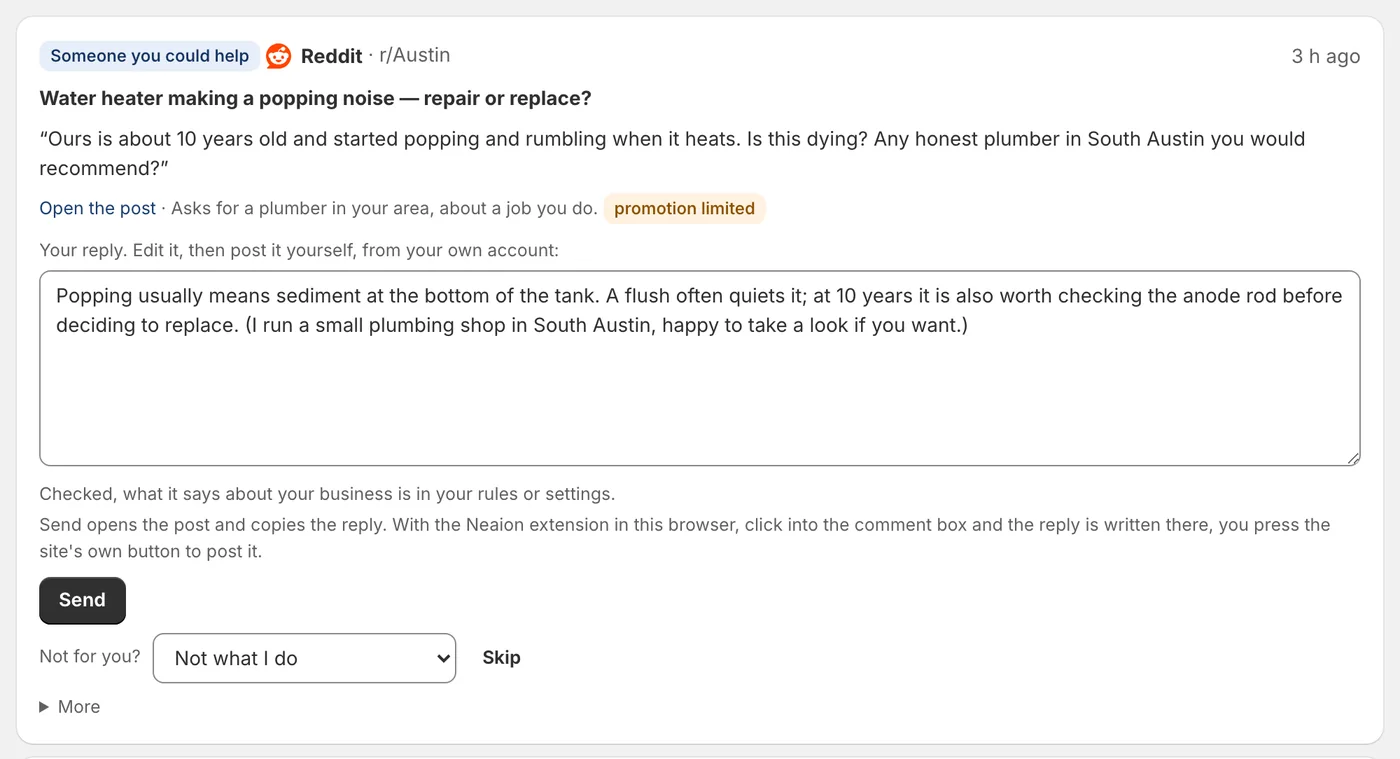
Every day someone asks on Reddit, Hacker News, X, Bluesky, YouTube comments or a niche forum for exactly what you make. Find those posts and answer the question well, whether or not they choose you.
- Say who you are
When you mention your own product, say so in the reply itself: "I built a tool for this." People forgive a maker who helps; they remember one who pretends.
- Launch in the places made for it
Show HN, Product Hunt, Indie Hackers and BetaList exist for new products. One good launch post in each, written plainly, and every comment answered on the day.
- Answer every person fast
Your first users judge the product by how quickly a human-sounding answer comes back. An answer within the hour, even at night, turns a trial into a customer more often than any feature.
- Post what you build, every day
A short post a day about what changed, what a user asked, what you learned. It costs ten minutes and it is what people find when they look you up.
- Ask each new user for one name
"Who else do you know with this problem?" Ask once, right after something went well for them.
- Count where each one came from
A reply, a launch, a post, a friend. After fifty users you will know which two of these to do twice as much.
What usually wastes the first months.
- Paying for ads before you know who buys. Ads find more of the people you already convert. Before your first ten customers, you do not know who they are yet.
- Copy-pasting the same reply everywhere. Communities notice in a day, and moderators remove it.
- Waiting for the product to be finished. The first hundred tell you what finished means.
- Answering slowly. A question left until tomorrow is often a user lost today.
Let your office do the daily part.
The hard part of the first hundred is doing the same things every day. Your Neaion office reads Reddit, X, Hacker News, Bluesky, YouTube and forums for people asking for what you make, and drafts a helpful reply that says who wrote it, for you to send. It answers every person who writes to you, at any hour, from your own facts, and asks you what it does not know. It plans and makes a post a day from your own product, for you to approve. And each month it shows you how many people you helped, how many wrote back and how many became customers. See how your office finds customers.
Asked before you start.
Should I run ads to get my first users?
Usually not yet. Ads find more of the people you already convert, and before your first ten customers you do not know who they are. Spend the time where people already ask instead.
Where do people ask for products like mine?
On Reddit, Hacker News, X, Bluesky, YouTube comments and niche forums, in their own words. Search for how they describe the problem, not for the name of your category.
Is it all right to mention my own product in a reply?
Where the community allows it, yes, if you say in the reply itself that it is yours and the reply helps even without it.
How long does it take to get 100 users?
It depends on the product and the effort. What matters more than speed is knowing, after the first fifty, which two sources brought most of them.
Read next
Set up your office in an afternoon.
Free to set up, no card needed. It reads your website, asks what it could not find, and nothing goes live until you have checked it.